
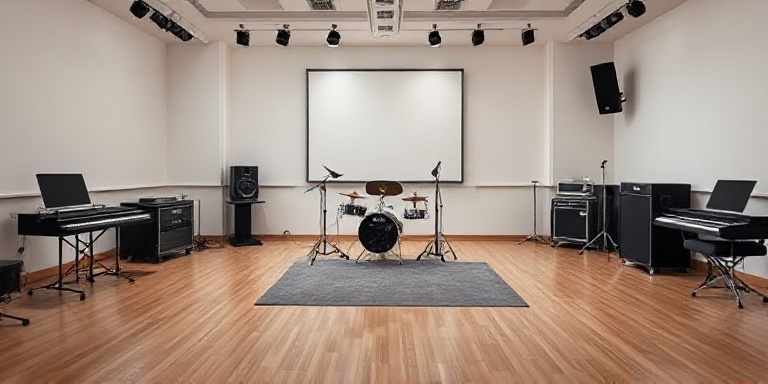
The final student of the day has just left. The house is quiet, save for the faint echo of a C-major scale. You’re exhausted, but your work isn't done. Now comes the "second shift": the frantic email ping-pong to reschedule little Liam’s lesson, the text thread with a parent about next month's availability, and the mental gymnastics of trying to remember who paid for this week. This administrative shadow work consumes hours you could spend refining your curriculum, practicing your craft, or simply recharging. For countless music instructors, this relentless cycle is the silent killer of passion and profit. But what if you had a silent partner? An unwavering system that handled the logistics, so you could focus on the music? This isn't a futuristic dream; it's the present-day reality enabled by specialized **music lesson scheduling software**. This article explores how transforming your booking process from a source of stress into a seamless engine of efficiency isn't just about saving time—it's the most powerful strategy you have to amplify student retention and build a thriving, sustainable teaching practice.
The Hidden Cost of Chaos: Why Manual Scheduling is Failing Your Music Studio
Before we dive into the solution, it's crucial to diagnose the problem accurately. For many independent music teachers, scheduling is managed through a patchwork of tools: paper planners, digital calendars, text messages, and emails. This fragmented approach creates a cascade of inefficiencies that directly impact your bottom line and well-being. First, consider the time tax. Every minute spent coordinating schedules, sending reminders, and chasing payments is a minute not spent on income-generating or skill-building activities. This administrative drag can easily consume 5-10 hours per week—time that could be filled with another student or dedicated to your own artistic development. Second, this chaos breeds communication breakdowns. A parent misses a text, an email gets buried, and suddenly you have a no-show or a double-booking. These incidents don't just cost you money; they erode the professional trust and reliability you've worked hard to build. The constant context-switching from artist to administrator fractures your focus, making it difficult to be fully present during lessons. This is precisely why learning **how to book music lessons online** systematically is no longer a luxury for tech-savvy teachers; it's a fundamental requirement for anyone serious about professionalizing their studio and protecting their most valuable asset: their time and mental energy.
Beyond the Calendar: What Truly Powerful Tools for Music Teachers Look Like
You might be thinking, "I already use a digital calendar. What's the big deal?" A standard calendar app is a passive tool; it's designed for personal time management, not for running a service-based business. Powerful **tools for music teachers to manage students** are active business systems. They do more than just display free slots. A dedicated scheduling platform acts as your 24/7 receptionist, your billing coordinator, and your communication hub. The core differentiator is the concept of "scheduling-by-services." Instead of just offering "time," you offer defined, bookable services like "30-Minute Beginner Piano Lesson," "45-Minute Advanced Guitar Coaching," or "60-Minute Vocal Workshop." This subtle shift is profound. It automatically communicates your service structure, sets clear expectations, and prevents confusion about lesson length and price. Furthermore, a true business-scheduling system provides a public-facing profile—a professional storefront that showcases your expertise, availability, and policies without requiring direct communication. This autonomy for the client is key to scaling your operations efficiently.
How Automated Scheduling Becomes Your Retention Engine
Student retention is the lifeblood of a stable music teaching business. Finding new students is expensive and time-consuming; keeping them is far more profitable. Automated scheduling directly addresses the most common pain points that lead students to drop out. Let's break down how:
Eliminating Scheduling Friction and "Life Amnesia"
Life gets busy for everyone—students and parents alike. When booking or rescheduling a lesson requires a multi-step process of checking availability, drafting an email, waiting for a reply, and confirming, it creates friction. This friction is often enough for a student to postpone or skip lessons, leading to a gradual drop-off. Automated systems remove this friction entirely. With a clear link, students can see your real-time availability and book instantly, 24/7. More importantly, automated SMS and email reminders combat "life amnesia." A gentle notification 24 or 48 hours before a lesson drastically reduces no-show rates and ensures students arrive prepared and ready to learn, making progress more consistent and satisfying.
Building Consistency and Habit
Progress in music is directly tied to consistency. Sporadic lessons lead to slow improvement and frustration. An automated system encourages students to book recurring time slots, turning their music lesson into a regular weekly appointment, much like a gym class or therapy session. This habit formation is critical for long-term engagement. When lessons are easy to schedule and hard to forget, students are more likely to stick with them through the inevitable plateaus in their learning journey.
Projecting Professionalism and Value
Perception influences value. When you use a streamlined, professional booking system, students and parents perceive your service as more valuable and legitimate. The experience of booking with you should feel as polished as the lesson itself. A chaotic, manual booking process can subconsciously signal disorganization, which can undermine their confidence in your teaching abilities. By providing a seamless client experience from the first click to the post-lesson follow-up, you reinforce your status as a top-tier professional worth investing in for the long haul.
A Step-by-Step Guide to Streamline Music Teaching with Appointment Scheduling
Implementing a new system can feel daunting, but the transition is straightforward and pays immediate dividends. Here is a practical guide to **streamline music teaching with appointment scheduling** using a platform like CalendX.
Step 1: Define Your Service Offerings
Start by listing all the services you offer. Be specific. For example: "Introductory 30-Min Piano Lesson," "Standard 45-Min Weekly Violin Lesson," "1-Hour Advanced Drum Kit Session," "Music Theory Tutoring Package." For each service, define the duration, price (if you're integrating payments later), and a brief description. This clarity is the foundation of your new system.
Step 2: Set Your True Availability
Block out your *actual* teaching hours in the system. Be realistic about when you are willing to teach. Don't forget to block out personal time, practice hours, and breaks to prevent burnout. The system will only show available slots within these windows, protecting you from overbooking or off-hours requests.
Step 3: Configure Buffer Times and Policies
This is a game-changer for maintaining sanity. Set buffers between lessons (e.g., 5-15 minutes) to allow for students who run late, for you to have a quick break, or to jot down notes from the previous session. Also, clearly define your cancellation policy (e.g., "24-hour notice required") within the system. The software can automatically enforce this policy, saving you from difficult conversations.
Step 4: Create and Share Your Booking Link
Once your services and availability are set up, you'll receive a unique, public booking page link—your professional storefront. Share this link everywhere: in your email signature, on your website's "Book Now" button, on your social media profiles, and in any initial communications with prospective students.
Step 5: Integrate and Automate Communication
Connect the system to your calendar (like Google or Outlook) so all bookings appear instantly in one place. Then, lean on the automation features. Set up automatic confirmation emails when a lesson is booked and reminder notifications (SMS or email) sent ahead of the appointment. This hands-off communication ensures nothing falls through the cracks.
Introducing CalendX: The Scheduling-by-Services Solution Built for Service Pros Like You
While there are several scheduling tools on the market, CalendX was built with a specific philosophy: that professionals who sell services need more than just a shared calendar. CalendX is a scheduling-by-services SaaS designed to empower individuals and small businesses by turning their time into bookable inventory. For a music teacher, this means you are not just renting out blocks of time; you are offering distinct educational experiences. With CalendX, you create a public professional profile where potential students can view your bio, see your available services (like "Beginner Guitar" vs."Jazz Improv Workshop"), and book time slots directly into your calendar without any back-and-forth. The platform focuses on simplicity and privacy—there are no third-party ads, critical data is secured with tokenized authentication (so your Google account is managed only by Google), and you can cancel your subscription at any time without hassle.
Addressing Common Objections: Is Now Really the Time?
We understand that adopting a new tool requires consideration. Let's address some common hesitations head-on.
"It seems too impersonal." On the contrary, it enhances personal connection *during* lesson time. By offloading administrative tasks to an automated system, you free up your mental bandwidth to be more present, focused, and engaged with your student when you are with them. The personal touch happens in the studio; let the system handle the paperwork.
"My students/parents prefer texting." You can still be available for questions via text! The key is to redirect scheduling-specific conversations to the booking link. A simple script works wonders: "I'd love to find time for Liam! To get it on both our calendars accurately, please book his preferred slot through my booking page here: [Your CalendX Link]. That will send us both automatic confirmations and reminders!" This trains clients to use the efficient system while keeping other lines of communication open.
"It's an extra expense." Frame this not as a cost, but as an investment in your business's growth and your personal sanity. Calculate how many hours per week you spend on scheduling admin. Multiply that by your hourly teaching rate. The cost of a scheduling subscription is almost certainly far less than the value of that recaptured time—time you can use to teach more students or enjoy your life.
The Future-Proof Studio: Scaling with Integrated Payments and Invoicing
The journey toward a fully streamlined studio doesn't stop with scheduling. The most powerful systems integrate all aspects of your business operations. While CalendX currently focuses on providing a robust and reliable scheduling foundation—the absolute core of any service business—the roadmap includes integrated payments, SMS notifications, and invoicing features that will be added in future releases once they meet our high standards for security and user experience.
Imagine a future where a student books a lesson package online and pays seamlessly at the time of booking. An invoice is automatically generated and stored. Reminders go out without you lifting a finger. This level of integration completely eliminates the administrative drag from your business, allowing you to scale from 20 students to 40 without doubling your workload or stress levels.
This holistic approach is what separates hobbyists from thriving business owners.**Tools for music teachers to manage students** are evolving from simple utilities into comprehensive business operating systems.
Conclusion
The narrative of the struggling artist who is brilliant at their craft but overwhelmed by their business is an old one—and it's one we can rewrite. Embracing automation isn't about losing your personal touch; it's about strategically deploying technology to protect it. By implementing a dedicated **music lesson scheduling software** like CalendX, you make a conscious decision to value your own time and expertise.
You are not just a music teacher; you are a small business owner, a mentor, and an artist.**Streamline music teaching with appointment scheduling** is the first and most critical step in building a practice that is not only financially rewarding but also sustainable and joyful over the long term.
Stop being your own unpaid administrative assistant.Start partnering with a system designed to handle the logistics.You've mastered your instrument; now it's time to master your business.The first note toward that future begins by learning exactly **how to book music lessons online** in a way that works for you,and more importantly,your students.Ready to amplify your retention and reclaim your time?Your silent partner awaits.