
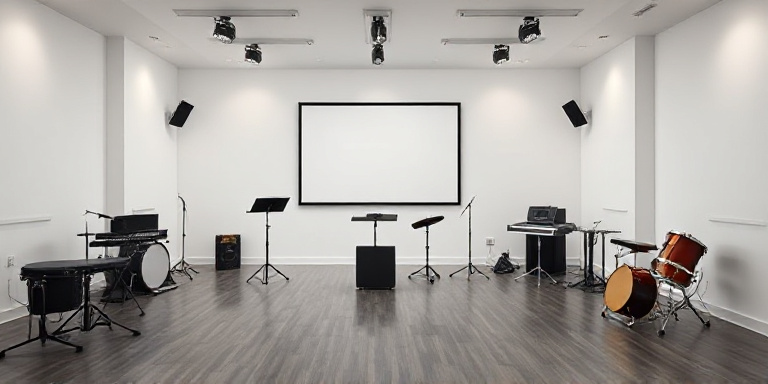
The final student of the day has just left. Your ears are ringing, your fingers are sore, and your heart is full from a day of sharing your passion. You reach for your phone to finally relax, but instead, you’re greeted by a digital avalanche. Three text messages about rescheduling next week’s lessons. Two emails asking about your availability for trial sessions. A voicemail from a parent wondering if you have a slot on Thursday instead of Tuesday. The post-teaching high evaporates, replaced by the familiar dread of administrative chaos. This "after-hours admin" is the unspoken second job of every music educator—the one you don't get paid for, the one that steals your evenings and weekends, and the one that slowly erodes your love for teaching itself. But what if you could automate the booking chaos and completely eliminate the scheduling scramble, all while preserving the personalized, human connection that is the very soul of music education? This blueprint reveals how the right **tools for music teachers to manage students** are not about becoming robotic; they're about reclaiming your time and your passion.
The Hidden Cost of Manual Music Lesson Scheduling
For most music teachers, the process of **how to book music lessons online** is a fragmented, time-sink nightmare. It often involves a patchwork system of texting, emailing, paper calendars, and mental gymnastics to track availability across 20, 30, or even 40+ students. The cost of this manual approach is far greater than just a few lost minutes. Let's break it down. First, there's the direct time cost. Conservatively estimating 5 minutes per student per week spent on scheduling communications (confirming, rescheduling, answering queries) amounts to over 3 hours for a teacher with 40 students. That’s a full workday every month spent purely on calendar logistics. Second, and more damaging, is the opportunity cost. Every hour spent playing calendar tag is an hour not spent on lesson planning, developing new teaching materials, practicing your own instrument, or marketing your studio to attract new students. This manual system also directly impacts student satisfaction. Confusion over timeslots, double-bookings, and slow response times can make an otherwise brilliant teacher seem disorganized and unprofessional. Finally, it leads to burnout. The mental load of keeping all these details in your head creates a low-grade anxiety that follows you everywhere, making it impossible to truly disconnect from your work. This is why a dedicated **music lesson scheduling software** isn't a luxury; for the modern music professional, it's a critical operational necessity.
What to Look For in Music Lesson Scheduling Software
Not all scheduling tools are created equal. A generic appointment app won't understand the unique nuances of a music teaching practice. When evaluating potential **tools for music teachers to manage students**, you need a platform built with your specific workflow in mind. The cornerstone feature is service-based scheduling. You don't just sell "time"; you offer distinct services like 30-minute beginner piano lessons, 45-minute advanced violin coaching, or 60-minute group theory workshops. Your software must allow you to create these services with their own durations, prices (if applicable), and descriptions, so clients are booking exactly what they need. Next is customizable availability. Your teaching schedule is complex—you might teach at a school on Mondays and Wednesdays, at your home studio on Tuesdays and Thursdays, and have specific blocks reserved for certain instrument types. A powerful tool lets you set intricate availability rules for each service or location. Buffer times are non-negotiable. You need automated padding between lessons to allow for student delays, quick restroom breaks, or jotting down notes from the previous session without making the next student wait. Client self-service is key. Parents and adult students should be able to view your real-time availability and book their own slots instantly, 24/7, without back-and-forth communication. Automated reminders via email and SMS drastically reduce no-shows and last-minute cancellations by sending gentle prompts 24 or 48 hours before a lesson. Finally, a centralized dashboard acts as your command center, giving you an at-a-glance view of your day, week, and month, with all student information and lesson notes in one place. A platform like CalendX is designed from the ground up with this service-based philosophy, providing music educators with a tailored system to **streamline music teaching with appointment scheduling** at its core.
Implementing Automation Without Sacrificing Your Personal Touch
The biggest fear many educators have is that automation will make their business feel cold, impersonal, and robotic—the antithesis of what music is about. This is a valid concern, but it stems from a misunderstanding of the goal. The purpose of automation is not to replace your personality; it's to eliminate the repetitive, low-value administrative tasks that drain your energy so you can pour more of yourself into the high-value, personal interactions that matter most: the teaching itself. The strategy is to automate the logistics but personalize the education. Let’s translate that into practice. Your automated booking page can—and should—be infused with your brand’s personality. Use a warm welcome message like "I can't wait to make music with you! Book your lesson below." Instead of a cold dropdown menu for "Service," label it "Choose Your Musical Adventure." Use the confirmation and reminder emails as touchpoints for your voice. An automated reminder can say: "Hi [Student Name], just a friendly reminder about our guitar lesson tomorrow at [Time]. Don't forget to bring your enthusiasm! See you then." This takes a mundane alert and turns it into an extension of your teaching style. Furthermore, automation actually enhances personalization by freeing up your cognitive bandwidth. When you’re not mentally exhausted from coordinating schedules, you can remember that Sarah just had a big recital or that David was struggling with a specific chord progression. You can use the notes section in your dashboard (a key feature of powerful **music lesson scheduling software**) to jot down these details after each lesson so you can start the next one with a personalized check-in: "Hey Sarah, how did you feel after that recital? Let's warm up with that piece you nailed." Automation handles the tedious work so you can be more present, more attentive, and more personally connected than ever before.
A Step-by-Step Guide to Setting Up Your Automated Scheduling System
Ready to transform your teaching business? Here’s how to implement a system that works for you and your students. Step 1: Audit Your Current Offerings. List out every service you provide: 30-min beginner voice, 45-min advanced piano, 1-hour group drum circle, etc. Define their duration and any specific details. Step 2: Map Your Ideal Weekly Schedule. Be realistic about your energy levels. When are you at your best for teaching? Block out those hours as available for bookings in your chosen tool. Don’t forget to block off personal time, practice time, and lunch breaks as unavailable. Step 3: Build Your Services in the Platform. Using a tool like CalendX, create each of your services as a bookable item. For each one, set the duration, add a clear description of what the student can expect, and assign it to the correct available time blocks in your calendar. Step 4: Configure Your Automation Rules. Set buffer times between lessons (5-10 minutes is standard). Write warm yet professional email templates for booking confirmations and reminders. Enable notifications for yourself so you’re alerted instantly when a new booking comes in. Step 5: Launch and Communicate.The key to a smooth transition is clear communication with your current students. Send a simple email: "To serve you better and ensure you always get your preferred time slot, I'm moving to an online booking system. You can now view my real-time availability and book/cancel/reschedule lessons instantly at [Your CalendX Link]. Let me know if you have any questions!" This frames the change as a benefit to them, which it truly is.
Beyond Booking: Using Your Newfound Time to Grow Your Studio
When you successfully **streamline music teaching with appointment scheduling**, you don't just get your evenings back; you unlock strategic time that can be invested directly into growing your business and income. The 3-5 hours per week you save on admin is now potential growth capital. Here’s what you can do with it.First, enhance your curriculum.Dive deeper into pedagogical research, create bespoke lesson plans for struggling students, or develop exciting new workshop offerings like "Songwriting Saturdays" or "Summer Music Theory Intensives" that you can add as new bookable services in your system.Second,focus on student retention.The number one reason students quit is feeling a lack of progress.Use this time to create personalized progress reports,video tutorials for them to practice with during the week,or simply send an encouraging text message celebrating their improvement.This level of personal attention dramatically increases loyalty.Third,pursue professional development.Use the reclaimed hours to finally take that masterclass on Suzuki method or get certified in music therapy techniques,making your offerings more valuable and allowing you to command higher rates.Fourth,systematize your marketing.Create content!Start a YouTube channel offering quick tips,follow up with past leads,and ask satisfied students for testimonials or referrals.The goal of automation is not idleness;it's strategic reallocation of your most valuable resource—your expertise and energy—from low-impact tasks to high-impact growth activities.
Addressing Common Concerns & Objections
It's natural to have reservations about shifting such a core part of your business."Will my older clients or their parents figure it out?"Modern booking systems are designed for simplicity.The best ones,much like popular retail sites,involve just a few clicks:choose a service,pick a time from clearly available slots,and confirm.Many even allow you to book on behalf of clients yourself until they get comfortable."I like having control over my schedule."This is perhaps the biggest misconception.Automation gives you *more* control,not less.You decide exactly which time slots are available for which services.The software merely enforces those rules 24/7 without you having to be there.It prevents double-booking and protects your personal time."It's an unnecessary expense."This is a classic false economy.Calculate your hourly teaching rate.Multiply that by the number of hours you currently spend on scheduling.That's the real cost of doing it manually.A modest monthly fee for a dedicated **music lesson scheduling software** is almost certainly far less than the value of the time you're wasting,and it pays for itself by preventing lost income from no-shows and by allowing you to scale.The investment is not in software;it's in your sanity,your time,and the future growth of your passion-led business.
Conclusion
The journey from administrative overwhelm to organized efficiency isn't about replacing the heart of your teaching with cold technology. It's about using smart tools to protect that heart—to shield your passion from the burnout of endless scheduling texts and double-booked Saturdays. By embracing a service-based approach to **how to book music lessons online**, you make a conscious decision to value your own time as much as you value your students' progress.You choose to invest your energy in crafting memorable lessons instead of coordinating calendars.The right **tools for music teachers to manage students** act as your silent administrative partner,tirelessly handling the logistics so you can focus on the magic:the moment a student finally masters a difficult piece,the joy of sparking a lifelong love of music,and building a sustainable,business around your art.It's time to stop being your own secretary and start being the master teacher you were meant to be.CalendX provides the dedicated,scheduling-by-services foundation to make this transition seamless,allowing you to finally **streamline music teaching with appointment scheduling** and reclaim both your time and your creative spirit.