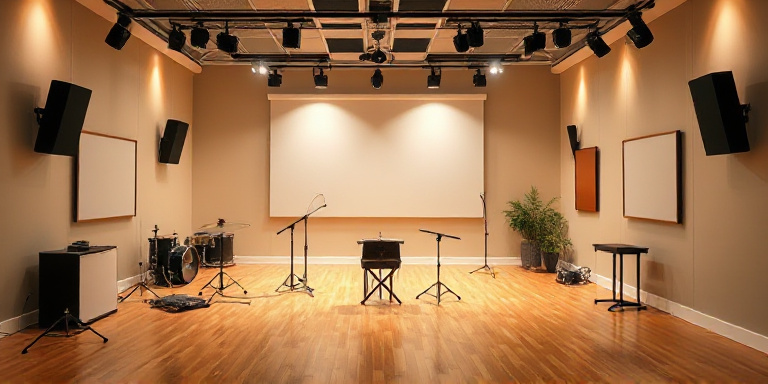
The final student of the day packs up their violin, the case clicking shut with a note of finality that echoes in your now-silent studio. As you wave goodbye, your mind doesn’t drift to the beautiful phrasing they finally mastered. Instead, it races ahead: you need to text a reminder to tomorrow’s 9 AM piano student, invoice the parent who booked the month’s lessons, reschedule the clarinet lesson canceled due to a school play, and somehow find time to update your website with your new summer workshop slots. The music has stopped, but the administrative cacophony is just reaching its crescendo. This relentless background noise of logistics is the silent dream-killer for passionate educators. What if you could reclaim those lost hours between lessons? What if your studio could practically run itself, allowing you to focus not on scheduling conflicts, but on chord progressions and creative expression? This is not a futuristic fantasy; it’s the operational reality of the modern, thriving music teacher. This guide is your roadmap out of the administrative weeds and into a seamlessly organized studio where your primary instrument is your expertise, not your calendar.
The Symphony of Strain: Why Music Teachers Are Uniquely Burdened by Admin
Unlike many service professionals, music teachers conduct a complex symphony of variables. You're not managing a single service but a repertoire of them: individual lessons for varying skill levels, group workshops, recital rehearsals, and make-up sessions. Each "client" is a student (and often their parent) with a unique schedule, payment plan, and learning path. Coordinating this via back-and-forth texts, emails, and paper calendars creates a fragile system prone to dissonance. A last-minute school event can disrupt a week's carefully planned schedule. Tracking who has paid for which month becomes a part-time accounting job. The cognitive load of remembering each student's next piece, their progress notes, and their scheduling quirks pulls your focus away from pedagogy. This manual approach to operations directly limits your capacity—there are only so many hours you can personally dedicate to coordination before you hit a ceiling on both income and artistic satisfaction. The first step to change is recognizing that these tasks are not core to teaching music; they are obstacles to it. The right tools for music teachers to manage students don't just add convenience; they remove fundamental barriers to growth and peace of mind.
Movement I: Automating the First Contact – How to Book Music Lessons Online Effortlessly
The journey from prospect to student is often where the first notes are lost. A parent finds your website but sees only an email address. They send an inquiry about violin lessons for their child. You reply with availability two days later, but they've already found another teacher. This leaky funnel costs you students. The modern solution is a professional, integrated booking system. A dedicated music lesson scheduling software like CalendX transforms your digital front door. You create a public profile listing your services: "Beginner Piano (30-min)," "Advanced Jazz Guitar Coaching (60-min)," "Summer Music Theory Workshop." For each service, you set your availability, duration, price (if displayed), and any required details. When a prospective student visits your booking page, they see your real-time availability presented in their own time zone. They select the service they want, pick an open slot that works for them, and book it instantly—no email tennis required. This 24/7 booking capability captures interest at its peak. It answers the universal question of "how to book music lessons online" with effortless clarity, projecting professionalism and respect for everyone's time from the very first interaction.
Movement II: Orchestrating Your Workflow – Centralizing Student Management
With new students booking seamlessly, the focus shifts inward to managing your ensemble. Juggling between a physical planner, Google Calendar, a notebook for progress reports, and a separate payment tracker is a recipe for missed beats. True efficiency comes from consolidation. Powerful tools for music teachers to manage students offer a centralized dashboard—your mission control for the entire studio. Imagine logging in and seeing a clean overview of today’s lessons: who’s coming, at what time, for which service, and any notes you’ve added ("Remember to focus on vibrato exercise"). From this dashboard, you can reschedule lessons with a drag-and-drop, view a student’s entire booking history, and manage your service catalog. This single source of truth eliminates the frantic searching through different apps. It allows you to streamline music teaching with appointment scheduling that is dynamic; if you need to block off time for recital preparation or personal practice, you do it once in your system, and it’s instantly reflected on your public booking page, preventing double-booking.
Movement III: The Rhythm of Reliability – Minimizing No-Shows & Maximizing Communication
"Did I forget to tell my teacher I'm sick?" "Is my lesson at 4 or 4:30 this week?" Unclear communication leads to missed lessons and lost revenue. Automation provides the steady rhythm of reliability. A robust scheduling system handles automated email and SMS reminders 24 or 48 hours before each appointment. These gentle nudges dramatically reduce no-shows and late arrivals by keeping your lesson time top-of-mind for busy families and adult students alike. Furthermore, any changes made by either party are communicated automatically. If you need to reschedule due to illness, the student receives an immediate notification with options for new slots. If a student cancels through the system according to your policy (e.g., more than 24 hours in advance), your calendar is instantly cleared, and you can optionally make that slot available for others seeking make-up lessons. This automated dialogue ensures everyone is in sync without you personally having to be the messenger for every minor change.
Movement IV: Composing Your Service Portfolio – Flexibility for Growth
A static teaching model limits growth. Perhaps you want to offer trial lessons at a discount, package four lessons at a monthly rate, or sell recorded video masterclasses. Manually managing these different offerings is cumbersome. A scheduling-by-services platform like CalendX is built for this complexity. You can create distinct "services" for every offering in your repertoire: "Introductory Voice Lesson (One-Time)," "Monthly Cello Package (4x Lessons)," "Adult Group Guitar Workshop." Each service can have its own description, duration, price point (or be marked as free), and specific availability rules. This modular approach allows you to experiment with new revenue streams easily. Promoting your new "Songwriting Lab" workshop is as simple as activating the service on your booking page—no technical overhaul needed. It empowers you to structure your business creatively around what works best for you and your students.
The Encore: Scaling Your Art Without Burning Out
The ultimate goal of automation isn't just to fill your calendar; it's to create space—space for deeper student connection, for your own continued practice and learning, and for strategic growth without burnout. When administrative tasks are handled silently in the background by reliable music lesson scheduling software, you regain mental bandwidth. That hour previously spent on scheduling emails can become an hour composing duets for your students or developing new curriculum materials. The reduction in last-minute cancellations and scheduling chaos lowers your stress levels, making you a more present and patient teacher. Furthermore, a streamlined operation makes scaling sustainable. Taking on more students or adding an assistant teacher becomes a logistical process managed within your system rather than a personal management nightmare.
Choosing Your Conductor's Baton: What to Look For in Scheduling Software
Not all scheduling tools are created equal with the music teacher's unique needs in mind. When evaluating platforms like CalendX or others, consider these non-negotiables: First, it must be built around *services*, not just generic appointments. Second, look for intuitive calendar integration that syncs bidirectionally so changes anywhere update everywhere. Third, ensure it provides a clean, professional public booking page that is customizable and mobile-friendly for parents booking on the go—this is key for solving how to book music lessons online. Fourth, automated reminders (email/SMS) are essential. Fifth, consider privacy and data security; platforms like CalendX that use tokenized authentication (e.g., with Google) keep sensitive data secure without storing passwords.
Tuning Your New System: A Step-by-Step Implementation Plan
Transitioning to an automated studio can feel daunting, but a phased approach makes it smooth.
Week 1: Setup & Migration. Choose your platform (like CalendX). Input all your recurring student lessons as fixed appointments or services in the new system.
Week 2: Communication & Go-Live. Announce the change to current students and parents via email or text frame it as an upgrade for their convenience (fewer mix-ups!). Share the link to your new booking page.
Week 3: Process Refinement. Start directing all new inquiries and make-up lesson requests through the online booking page exclusively.
Ongoing: Use the newfound time proactively! Review student progress notes before they arrive or plan that community recital you've always dreamed of.
The Final Cadence: Your Time Is Your Most Valuable Instrument
The life of a music teacher is a calling driven by passion—the passion for sharing language of music itself cannot be automated nor should it be But everything surrounding that core mission can be orchestrated with precision The friction points of scheduling communication invoicing are solvable technical challenges By embracing purpose built tools you choose not replace human connection but fiercely protect it You invest not in software but in reclaiming irreplaceable hours that can be redirected toward artistry mentorship personal fulfillment The modern studio isn't defined by more gadgets; it's defined by intentional flow where technology handles logistics so you can focus on legacy Let this be moment you mute administrative noise turn volume up on what truly matters
Conclusion
The path from a chaotic schedule-driven practice to a harmonious, student-focused studio is clear. It requires moving beyond manual methods and adopting systems designed for the intricate rhythm of teaching music By implementing dedicated **music lesson scheduling software** mastering **how book music lessons online** leveraging comprehensive **tools music teachers manage students** you fundamentally **streamline music teaching appointment scheduling** This transformation powered solutions like CalendX isn't about working harder—it's about working smarter freeing yourself conduct symphony career on own terms Stop letting calendar compose life Pick up baton take control let music play on